A makeup sponge is one of the most versatile tools in any beauty routine. Whether you want a natural everyday look or a full-coverage finish, the right makeup sponge can help blend foundation, concealer, blush, contour, and highlighter smoothly and evenly.
Unlike traditional makeup brushes, a beauty sponge creates a soft, seamless finish that looks more natural on the skin. However, choosing the right product and using it correctly can make a significant difference in your makeup results.
In this guide, we will explain how to select the best makeup sponge, how to use it for different products, and how to clean and store it properly.
What Is a Makeup Sponge?
A makeup sponge is a soft cosmetic applicator designed to blend liquid, cream, and powder makeup products. Most modern makeup sponges are made from latex-free foam, which makes them suitable for many skin types, including sensitive skin.
Makeup sponges come in different shapes, sizes, and textures. Common designs include:
- Teardrop-shaped beauty sponges
- Flat-edge makeup sponges
- Mini precision sponges
- Silicone makeup sponges
- Wedge makeup sponges
- Dual-ended blending sponges
Each shape is designed for a specific purpose. Rounded sides are ideal for blending large areas, pointed tips work well around the eyes and nose, and flat edges can be used for contouring or applying makeup along the jawline.
Why Use a Makeup Sponge?
A high-quality makeup sponge offers several benefits for both beginners and professional makeup artists.
1. Creates a Seamless Finish
A damp makeup sponge helps press foundation into the skin instead of leaving visible brush strokes. This creates a smooth, natural-looking finish.
2. Works With Multiple Products
A beauty sponge can be used with:
- Liquid foundation
- Cream foundation
- Concealer
- Cream blush
- Cream bronzer
- Liquid highlighter
- Setting powder
This makes it a convenient, multi-purpose addition to any makeup collection.
3. Suitable for Different Coverage Levels
The application technique determines the coverage. Lightly bouncing the sponge over the skin creates a sheer finish, while repeated tapping builds medium or full coverage.
4. Easy to Carry
Makeup sponges are lightweight and travel-friendly. Unlike large brush collections, one sponge can often handle several steps in a complete makeup routine.
5. Comfortable on the Skin
Soft, flexible foam can apply makeup gently without pulling or irritating the skin. This is especially useful around delicate areas such as the under-eye area.
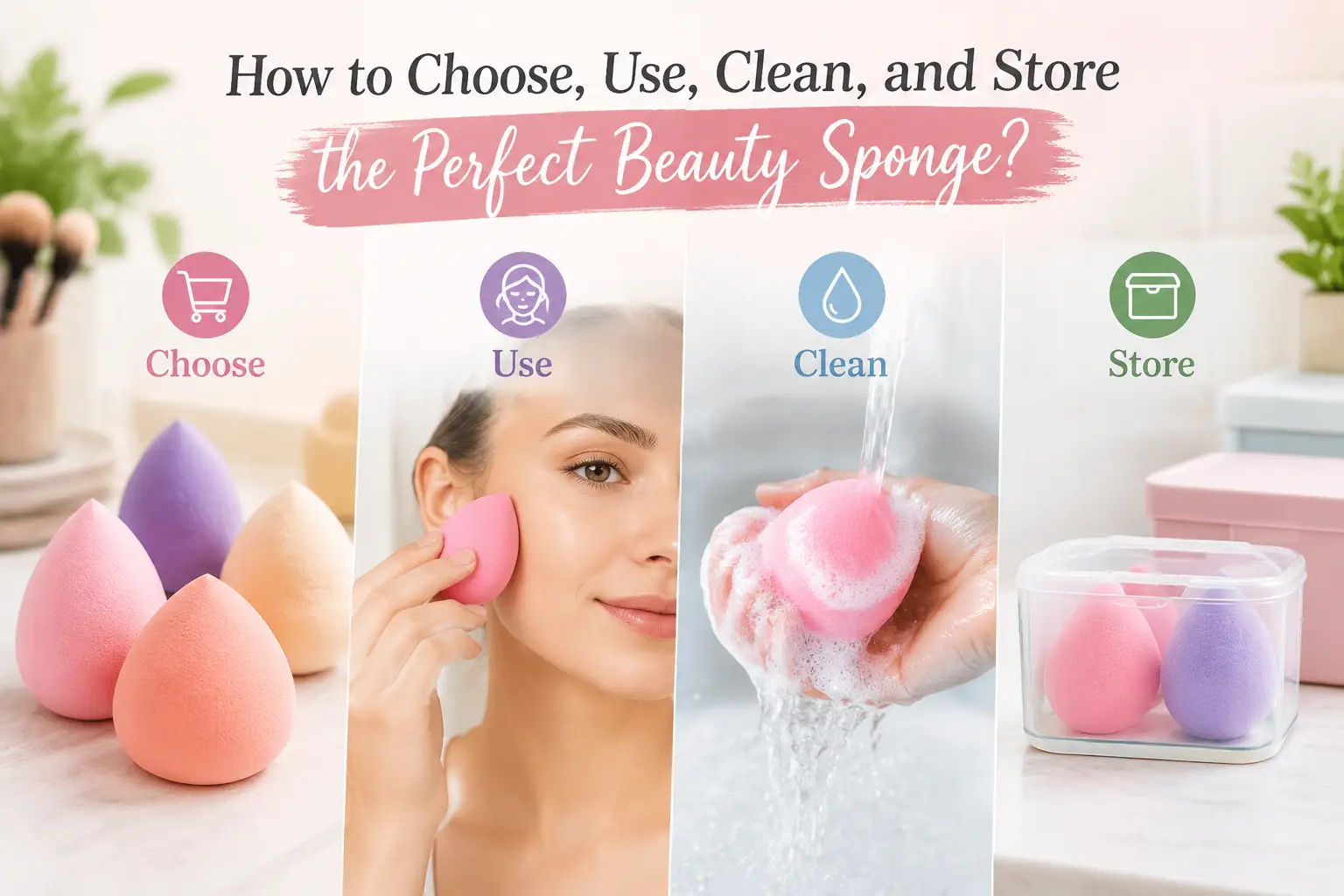
How to Choose the Best Makeup Sponge
With so many products available, selecting the best makeup sponge may seem difficult. Consider the following factors before making a purchase.
Material
Most beauty sponges are made from latex-free polyurethane foam. Latex-free materials are generally preferred because they are soft, flexible, and less likely to cause issues for people with latex sensitivities.
A good sponge should feel soft but not overly fragile. It should expand when damp and return to its original shape after use.
Shape
The shape of a makeup sponge affects how easily it can be used.
A teardrop sponge is a popular all-purpose option. Its rounded bottom blends foundation across the cheeks and forehead, while the pointed tip reaches smaller areas.
A flat-edge sponge is useful for applying makeup around the nose, eyes, and jawline. It can also help create more defined contour lines.
Mini sponges are ideal for concealer, eyeshadow blending, and detailed applications.
Texture
The texture should be fine and smooth enough to blend makeup without absorbing too much product. A sponge with an uneven or rough surface may create patchy coverage.
For liquid foundation, choose a dense yet soft sponge. For powder, a slightly more porous texture can help press product into the skin.
Reusable or Disposable
Reusable makeup sponges are more economical and environmentally friendly when cleaned regularly. Disposable wedge sponges can be useful for professional services, travel, or situations where hygiene is especially important.
For everyday personal use, a washable and reusable beauty sponge is often the most practical choice.
Should You Use a Makeup Sponge Wet or Dry?
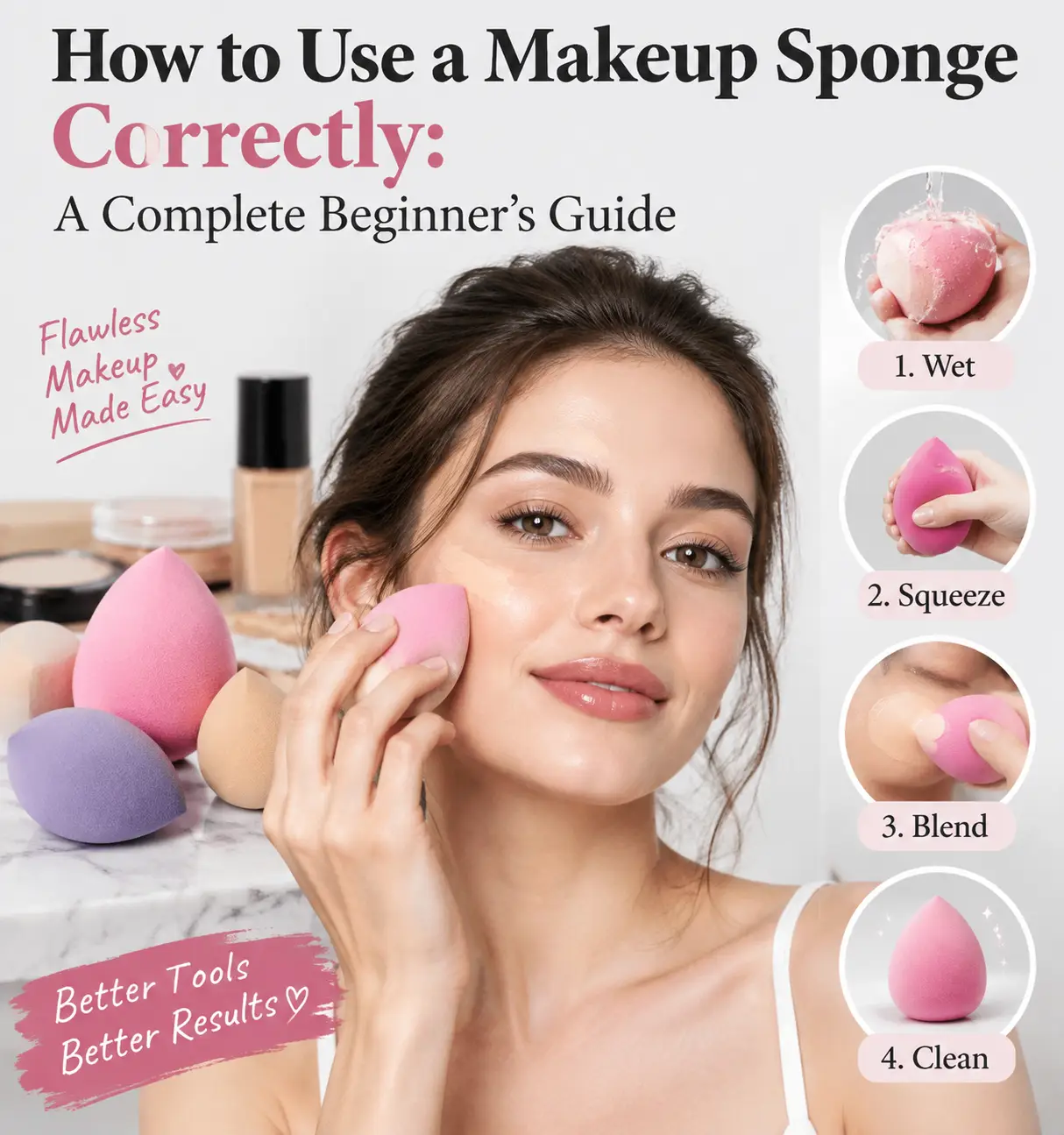
Most liquid and cream makeup products are best applied with a damp makeup sponge. Wetting the sponge allows it to expand, making the surface softer and reducing product absorption.
To use a sponge correctly:
- Hold the sponge under clean water.
- Allow it to absorb the water completely.
- Squeeze it gently several times.
- Wrap it in a clean towel and press out any remaining moisture.
The sponge should be damp, not dripping wet. A properly damp sponge feels soft and bouncy.
A dry makeup sponge can provide heavier coverage because it absorbs less water. However, it may also absorb more foundation and create a less flexible application. For most users, a damp sponge provides a more natural finish.
How to Apply Foundation With a Makeup Sponge
Using a makeup sponge for foundation is simple, but technique matters.
First, apply a small amount of foundation to the back of your hand or directly onto different areas of your face. Use the rounded side of the sponge to gently bounce the product over your skin.
Avoid dragging or wiping the sponge. Instead, use a pressing and bouncing motion. Start in the center of the face, where more coverage is often needed, and blend outward toward the hairline and jawline.
For buildable coverage, wait a few seconds between layers. Applying several thin layers usually looks smoother than applying one thick layer.
How to Use a Beauty Sponge for Concealer
The pointed tip of a makeup sponge is perfect for concealing blemishes and blending under-eye concealer.
Apply a small amount of concealer beneath the eyes or on areas that need extra coverage. Use the pointed end to tap the product gently into the skin.
For under-eye makeup, begin near the inner corner and blend outward. Use light pressure to avoid disturbing the foundation underneath.
A mini makeup sponge can provide even greater precision for small imperfections and detailed areas.
How to Apply Cream Blush and Contour
Makeup sponges are also effective for cream blush, bronzer, and contour products.
For cream blush, apply a small amount to the cheeks and blend with the rounded side of the sponge. Use a tapping motion to soften the edges while keeping the color visible.
For contour, use the flat or angled side of the sponge along the cheekbones, forehead, and jawline. Blend carefully to avoid creating harsh lines.
Because a sponge provides a soft finish, it is especially useful for beginners who want natural-looking definition.
How to Use a Makeup Sponge With Powder
A damp sponge can also be used with loose or pressed powder. This technique is commonly used for setting concealer or creating a more polished finish.
Dip the sponge lightly into the powder, then press it gently onto the skin. Avoid using too much product, especially around the eyes and areas with fine lines.
For a lightweight finish, use a dry sponge or a fluffy brush to apply a small amount of powder. For stronger setting power, a damp sponge can press powder more firmly into the skin.
How to Clean a Makeup Sponge
Cleaning your makeup sponge regularly is essential. The sponge can collect makeup residue, oil, dust, and bacteria after repeated use.
Follow these steps:
- Wet the sponge with lukewarm water.
- Apply a gentle cleanser or sponge-cleaning solution.
- Massage the sponge carefully to release foundation and concealer.
- Rinse it under running water until the water becomes clear.
- Squeeze out excess moisture without twisting aggressively.
- Leave it in a clean, well-ventilated place to dry.
For daily makeup users, washing the sponge after each use is ideal. If that is not practical, clean it thoroughly several times a week.
Do not store a damp sponge inside a closed cosmetic bag. Lack of airflow can create an environment where unwanted microorganisms multiply.
When Should You Replace a Makeup Sponge?
Even with proper cleaning, a reusable makeup sponge should be replaced regularly. Replace it immediately if you notice:
- Cracks or tears
- A rough or hardened texture
- Persistent stains
- An unusual smell
- Changes in shape
- Difficulty rinsing out makeup
A damaged sponge may apply makeup unevenly and can be more difficult to clean. Many users replace their beauty sponge every one to three months, depending on how frequently it is used and how well it is maintained.
Common Makeup Sponge Mistakes
Avoiding a few common mistakes can improve your makeup application.
Using Too Much Product
A sponge can blend makeup beautifully, but applying too much foundation may cause the sponge to absorb unnecessary product. Start with a small amount and build coverage gradually.
Dragging Instead of Bouncing
Dragging the sponge can move the product around and create streaks. A gentle bouncing motion generally produces a more even finish.
Skipping Cleaning
An unwashed sponge can affect makeup performance and create hygiene concerns. Regular cleaning should be part of every beauty routine.
Storing It While Wet
Always allow the sponge to dry completely before placing it in a container or makeup bag.
Using One Sponge for Every Product
Although a single sponge can be versatile, using separate sponges for complexion products and stronger pigments can help prevent unwanted color transfer.
Final Thoughts
A makeup sponge is a simple but powerful beauty tool. The right sponge can make foundation look smoother, concealer more natural, and cream products easier to blend.
For the best results, choose a soft, durable, latex-free sponge, dampen it before applying liquid makeup, and use gentle bouncing motions. Regular cleaning and proper storage will help maintain its performance and extend its lifespan.
Whether you are building your first makeup kit or upgrading your professional beauty collection, a reliable makeup sponge is an essential product for achieving a flawless, comfortable, and natural-looking finish.
Frequently Asked Questions
Is a makeup sponge better than a brush?
Neither tool is universally better. A makeup sponge usually creates a softer, more skin-like finish, while a brush may offer faster application and stronger coverage. Many makeup users combine both tools.
Can I use a makeup sponge for powder?
Yes. A makeup sponge can be used with loose or pressed powder, especially for setting concealer or creating a more matte finish.
How often should I wash my makeup sponge?
Ideally, wash it after every use. At minimum, clean it thoroughly several times per week.
Can I use a makeup sponge dry?
Yes, but a dry sponge may provide heavier coverage and absorb more foundation. A damp sponge is usually preferred for a smooth and natural finish.
How long does a reusable makeup sponge last?
With regular cleaning and careful use, a reusable sponge typically lasts one to three months. Replace it sooner if it becomes damaged, rough, or develops an odor.