Introduction
A makeup sponge is one of the easiest beauty tools to use, but using it correctly can make a big difference in your final makeup look. Whether you are applying foundation, concealer, cream blush, or setting powder, the right sponge technique can help create a smooth, natural, and skin-like finish.
Many beginners buy a beauty sponge but are unsure whether to use it wet or dry, how much product to apply, or how to clean it properly. This guide explains everything you need to know about using a makeup sponge correctly.
What Is a Makeup Sponge?
A makeup sponge is a soft cosmetic applicator designed to blend makeup products evenly onto the skin. It is commonly used with liquid foundation, cream foundation, concealer, blush, contour, bronzer, highlighter, and powder.
Most modern makeup sponges are made from soft, latex-free foam. When dampened with water, the sponge expands and becomes softer, making it easier to blend products without harsh lines.
Common types include:
- Teardrop makeup sponge
- Flat-edge beauty sponge
- Mini makeup sponge
- Wedge sponge
- Powder puff-style sponge
Each shape is designed for different areas of the face and different makeup techniques.
Should You Use a Makeup Sponge Wet or Dry?
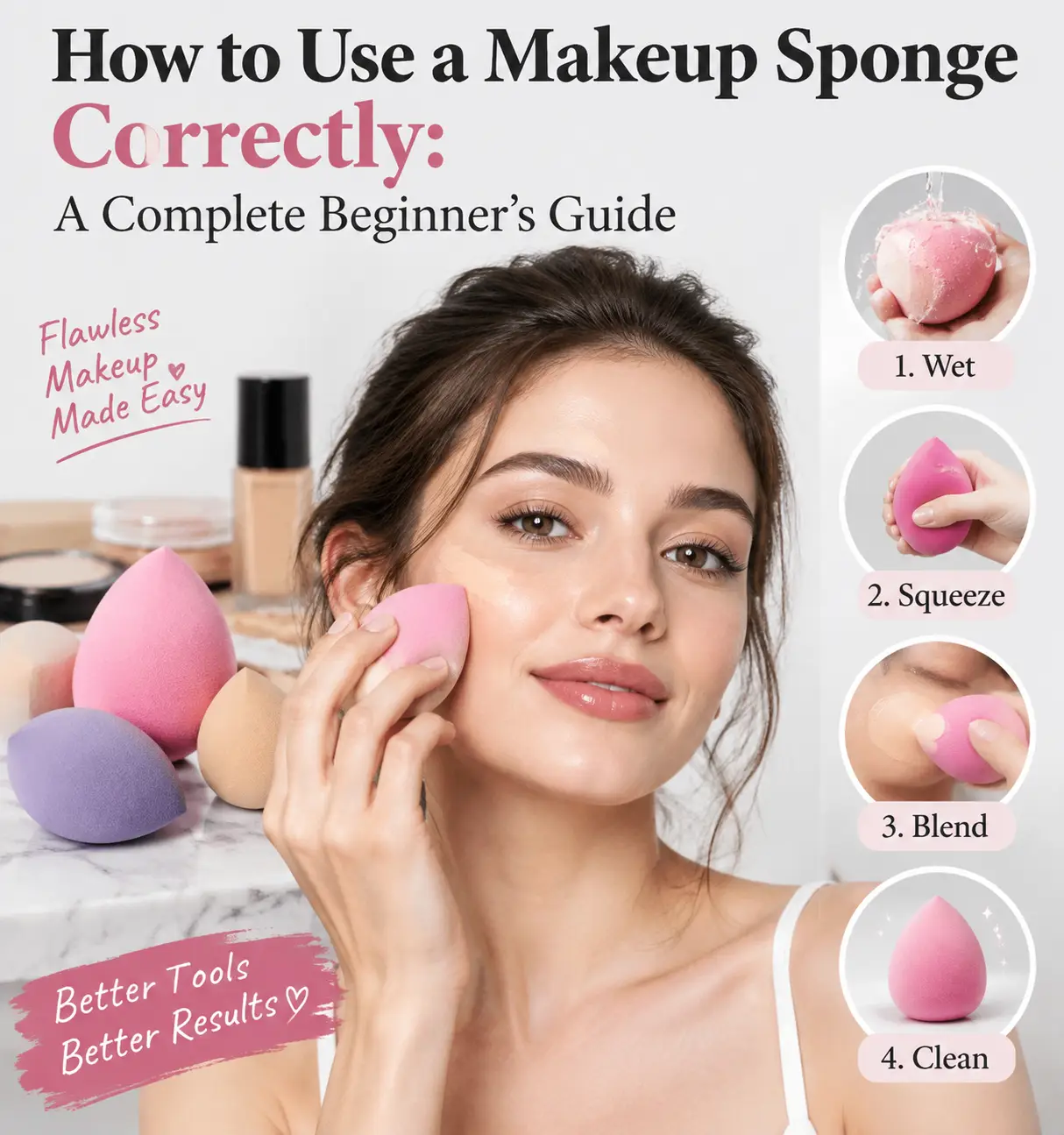
For most liquid and cream products, a damp makeup sponge works best. Wetting the sponge helps it expand and become softer. It also helps reduce product absorption, so more makeup stays on your skin instead of soaking into the sponge.
To prepare your sponge:
- Hold the sponge under clean water.
- Squeeze it several times until it expands.
- Remove excess water with your hand.
- Press it gently with a clean towel.
The sponge should be damp, not dripping wet.
A dry makeup sponge can be used for powder products or when you want heavier coverage. However, dry sponges may absorb more liquid foundation and can sometimes make blending more difficult.
How to Use a Makeup Sponge for Foundation
Foundation is one of the most common products applied with a makeup sponge.
Start by placing a small amount of foundation on the back of your hand or directly onto your face. Use the rounded side of the sponge and gently bounce it over your skin.
Do not drag or swipe the sponge. A tapping motion helps press the foundation into the skin and creates a smoother finish.
Begin in the center of the face, where most people need more coverage, then blend outward toward the hairline and jawline. Add more foundation only where needed.
How to Use a Makeup Sponge for Concealer
For concealer, use the pointed tip or a mini makeup sponge. These areas are better for precision, especially around the eyes, nose, and blemishes.
Apply a small amount of concealer under the eyes or on specific spots. Then tap gently with the sponge until the edges are blended.
Avoid using too much pressure under the eyes. The skin in this area is delicate, so light tapping is enough.
How to Use a Makeup Sponge for Cream Blush and Contour
A makeup sponge is also useful for cream blush, bronzer, and contour products.
For cream blush, apply a small amount to the apples of your cheeks and blend upward. Use the rounded side of the sponge for a soft, natural effect.
For contour, use the flat edge or angled side of the sponge. Apply product under the cheekbones, along the jawline, or around the forehead, then blend carefully until there are no harsh lines.
Using a sponge makes cream products look softer and more natural than applying them with fingers alone.
How to Use a Makeup Sponge for Powder
Many people do not realize that a makeup sponge can also be used with powder.
For setting powder, dip the flat side of a damp sponge into loose powder and press it onto areas that need setting, such as under the eyes or around the nose.
This method is useful for controlling shine and helping makeup last longer. If you want a lighter finish, use less powder and press gently.
Common Makeup Sponge Mistakes to Avoid
Using the Sponge Too Dry
A dry sponge can absorb more foundation and may not blend smoothly. For liquid and cream makeup, dampen the sponge first.
Dragging Instead of Tapping
Dragging the sponge can move makeup around and create streaks. Tapping or bouncing gives a smoother finish.
Applying Too Much Product
Start with a small amount of foundation or concealer. You can always add more, but too much product can look heavy.
Not Cleaning the Sponge
A dirty sponge can collect makeup, oil, and bacteria. Cleaning it regularly is important for both hygiene and performance.
Storing It While Wet
Do not put a damp sponge inside a closed makeup bag. Let it dry in a clean, ventilated area first.
How to Clean a Makeup Sponge
Cleaning your makeup sponge helps maintain softness and prevents product buildup.
Follow these steps:
- Wet the sponge with lukewarm water.
- Apply gentle soap or sponge cleanser.
- Massage the sponge carefully.
- Rinse until the water runs clear.
- Squeeze out extra water.
- Let it air-dry completely.
If you use your sponge every day, cleaning it after each use is ideal. At minimum, wash it several times per week.
When Should You Replace a Makeup Sponge?
Even a good reusable makeup sponge will not last forever. Replace your sponge if you notice:
- Tears or cracks
- Strange smell
- Hard texture
- Stubborn stains
- Poor elasticity
- Uneven makeup application
Most reusable makeup sponges should be replaced every one to three months, depending on how often they are used and cleaned.
How to Choose the Best Makeup Sponge
When buying a makeup sponge, look for one that is soft, flexible, and latex-free. A good sponge should expand when wet, feel comfortable on the skin, and return to its original shape after squeezing.
Important features include:
- Latex-free material
- Soft texture
- Good elasticity
- Low product absorption
- Easy cleaning
- Durable structure
- Suitable shape for your routine
For everyday use, a teardrop or flat-edge sponge is a practical choice. For detailed application, mini sponges are useful.
Conclusion
A makeup sponge is a simple tool, but the right technique can completely improve your makeup routine. Use it damp for liquid and cream products, tap instead of drag, and clean it regularly to keep it fresh and effective.
Whether you are applying foundation, concealer, blush, contour, or powder, a quality makeup sponge can help you achieve a smoother, more natural, and flawless finish.
FAQ
Is a makeup sponge good for beginners?
Yes. A makeup sponge is beginner-friendly because it blends makeup easily and helps reduce harsh lines.
Can I use a makeup sponge every day?
Yes, you can use it daily, but it should be cleaned regularly and replaced when damaged.
Do makeup sponges waste foundation?
A dry sponge may absorb more foundation. A damp makeup sponge usually helps reduce product waste.
Can I use the same sponge for foundation and concealer?
Yes, but using different sides of the sponge or separate sponges can help prevent color mixing.
What is the best way to dry a makeup sponge?
Let it air-dry in a clean, open, and ventilated area. Do not store it in a sealed bag while damp.