Makeup Sponge: The Complete Guide to a Flawless Makeup Application
A makeup sponge is one of the most popular beauty tools for applying foundation, concealer, blush, and other complexion products. Unlike traditional makeup brushes, a sponge can create a soft, natural-looking finish by gently pressing makeup into the skin.
Whether you prefer a dewy glow, medium coverage, or a smooth full-coverage look, the right makeup sponge can make a noticeable difference. However, choosing the best sponge and using it correctly is essential for achieving professional-looking results.
In this guide, we will explain what a makeup sponge is, how to use it, how to clean it, how often to replace it, and how to choose the right one for your beauty routine.
What Is a Makeup Sponge?
A makeup sponge is a soft applicator designed to blend liquid, cream, and powder makeup products. Most modern beauty sponges are made from flexible foam materials that can be used wet or dry.
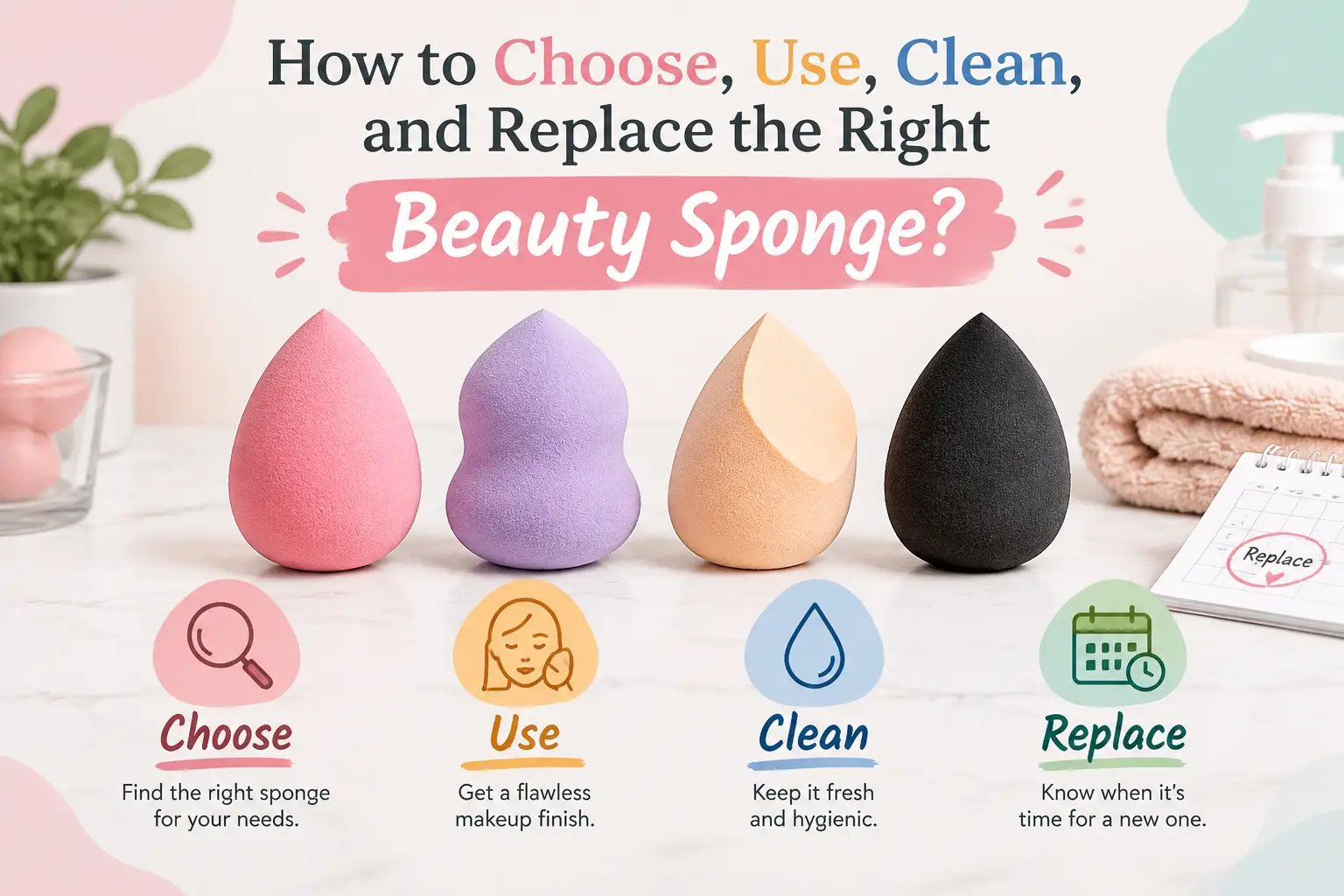
The most common makeup sponge shapes include:
- Teardrop-shaped sponges: Ideal for blending foundation and concealer
- Flat-edged sponges: Useful for applying makeup around the nose and under the eyes
- Angled sponges: Great for contouring and precise application
- Mini sponges: Designed for detailed areas and spot concealing
- Round or oval sponges: Suitable for applying foundation over larger areas
A high-quality makeup sponge should feel soft, flexible, and evenly textured. It should blend products without absorbing too much makeup or leaving visible streaks.
Why Use a Makeup Sponge?
Many makeup lovers choose a beauty sponge because it can create a seamless, airbrushed finish. It is especially useful for liquid foundation and concealer.
1. Creates a Natural Finish
A damp makeup sponge can help sheer out heavy foundation and produce a more skin-like appearance. It presses the product into the skin rather than simply spreading it across the surface.
2. Blends Makeup Evenly
A sponge can blend foundation, concealer, cream blush, and contour products without harsh edges. This makes it easier to achieve a balanced makeup look.
3. Works With Different Products
Depending on its material and texture, a makeup sponge can be used with:
- Liquid foundation
- Cream foundation
- Concealer
- Cream blush
- Liquid highlighter
- Cream bronzer
- Loose powder
- Pressed powder
4. Helps Build Coverage
A beauty sponge allows you to apply makeup in thin layers. You can start with light coverage and gradually add more product where needed.
5. Useful for Detailed Application
The pointed tip of a teardrop sponge can reach small areas such as the inner corners of the eyes, the sides of the nose, and blemishes.
How to Use a Makeup Sponge Correctly
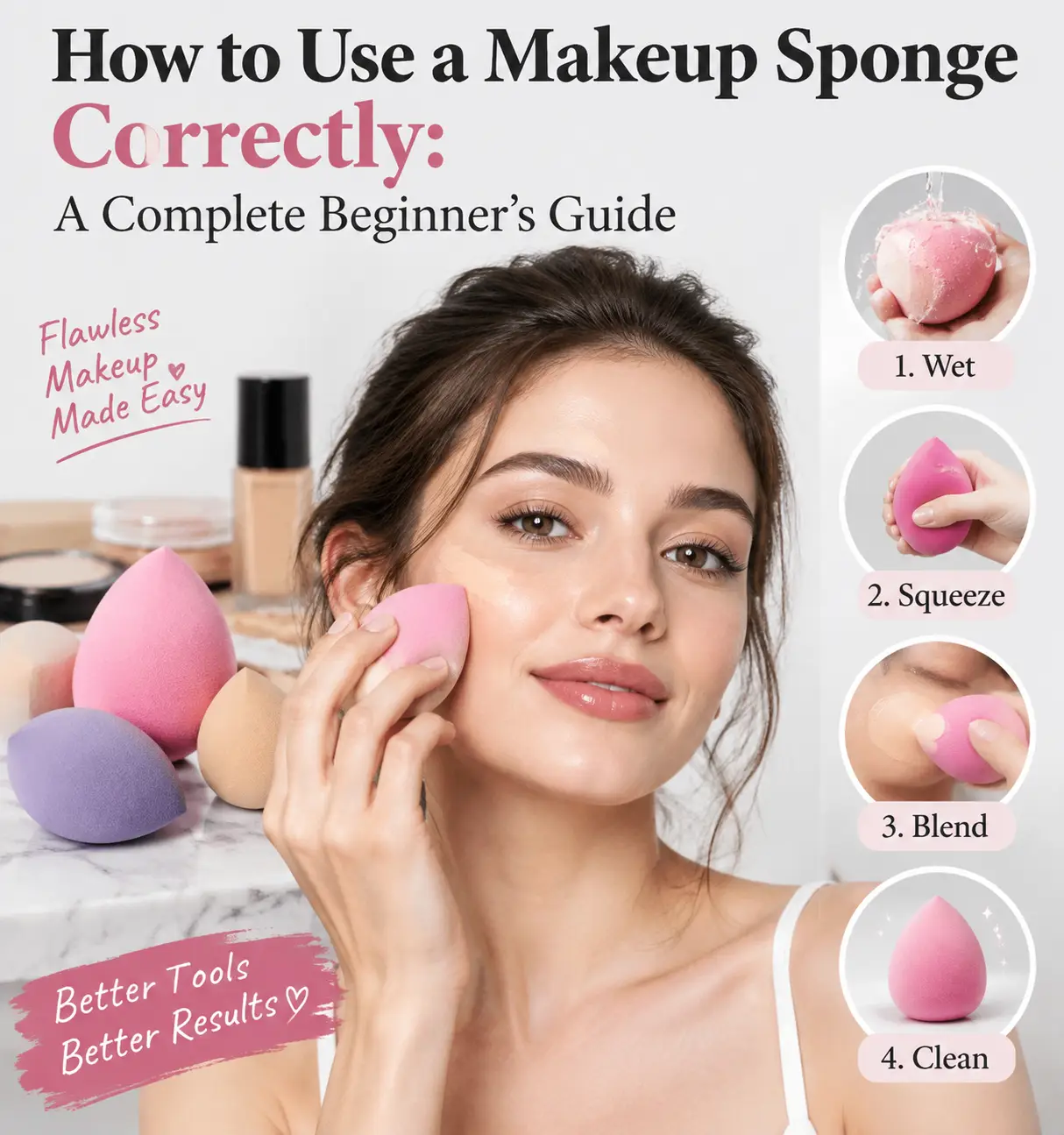
Using a makeup sponge is simple, but the application technique can affect the final result. Follow these steps for a smooth and even finish.
Step 1: Dampen the Sponge
Place the makeup sponge under clean running water and allow it to absorb moisture. Then squeeze it several times until it expands.
Use a clean towel to remove excess water. The sponge should be damp, not soaking wet.
A damp sponge usually creates a softer and more natural finish. A dry sponge may provide heavier coverage but can absorb more product.
Step 2: Apply Makeup to Your Face or Sponge
You can apply foundation directly to your face or place a small amount on the back of your hand first.
For better control, start with a small amount of product. It is easier to add more foundation than to remove excess makeup.
Step 3: Use a Bouncing Motion
Gently bounce the rounded side of the sponge over your face. Avoid dragging or rubbing the sponge, as this may create uneven coverage or remove makeup from certain areas.
Focus on one section at a time:
- Cheeks
- Forehead
- Chin
- Nose
- Under-eye area
Use the pointed tip around the nose, eyes, and other small areas.
Step 4: Build Coverage Gradually
If you need additional coverage, apply another thin layer instead of using a large amount of foundation at once.
Layering helps prevent a heavy or cakey appearance and gives you more control over the final finish.
Step 5: Set Your Makeup
After applying foundation and concealer, use a clean sponge to gently press a small amount of setting powder onto areas that tend to become oily.
This technique can help makeup last longer without making the skin look overly matte.
Wet vs. Dry Makeup Sponge: Which One Should You Use?
Makeup sponges can usually be used either wet or dry. The best option depends on the product and finish you want.
Using a Wet Makeup Sponge
A damp sponge is best for:
- Natural-looking foundation
- Lightweight coverage
- Dewy or radiant finishes
- Blending liquid and cream products
- Preventing excessive product absorption
A wet sponge is particularly useful when applying hydrating foundation or makeup designed to create a fresh complexion.
Using a Dry Makeup Sponge
A dry sponge may be suitable for:
- Full-coverage foundation
- Powder products
- Touch-ups
- Applying thicker cream products
- Creating a more matte finish
However, a dry sponge may absorb more liquid foundation. If you notice that your makeup disappears into the sponge, try dampening it slightly before use.
How to Choose the Best Makeup Sponge
With so many beauty sponges available, choosing the right one can be confusing. Consider the following factors before making a purchase.
1. Material
Look for a sponge made from soft, skin-friendly, and latex-free material if you have sensitive skin or a latex allergy.
A good sponge should have a fine, even texture. Extremely rough or stiff materials may irritate the skin and make blending difficult.
2. Shape
The shape of the sponge determines how easily you can apply different products.
- Use the rounded side for cheeks, forehead, and jawline.
- Use the pointed tip for concealer and precise application.
- Use a flat edge for contouring and applying powder.
- Choose a mini sponge for small details and travel use.
3. Density
A softer sponge usually provides a more natural finish. A denser sponge may offer stronger coverage and more control when working with thicker products.
If you prefer lightweight makeup, choose a soft and flexible sponge. If you regularly use full-coverage foundation, a slightly denser sponge may be more practical.
4. Size
A full-size makeup sponge is useful for everyday foundation application. Smaller sponges are convenient for concealer, detailed blending, and travel.
Many makeup users prefer owning more than one size for different parts of the face.
5. Reusable or Disposable
Reusable makeup sponges are economical and environmentally friendly when cleaned properly. Disposable sponges can be convenient for professional makeup artists, special occasions, or situations where hygiene is a priority.
For everyday personal use, a washable and reusable beauty sponge is usually the more practical choice.
How to Clean a Makeup Sponge
Cleaning your makeup sponge regularly is important because it can collect foundation, oil, dead skin cells, and bacteria.
Basic Cleaning Method
- Wet the sponge with warm water.
- Apply a gentle cleanser or sponge-cleaning solution.
- Massage the cleanser into the sponge.
- Squeeze the sponge repeatedly until makeup begins to come out.
- Rinse under running water.
- Continue rinsing until the water runs clear.
- Gently press out excess water.
- Place the sponge in a clean, well-ventilated area to dry.
Avoid twisting the sponge aggressively, as this may damage its structure.
How Often Should You Clean a Makeup Sponge?
Ideally, wash your makeup sponge after every use. If daily cleaning is not practical, clean it at least several times a week.
A sponge used with liquid foundation should be cleaned more frequently because liquid and cream products can create a damp environment where microorganisms may grow.
What Cleaners Can You Use?
You can use:
- A cleanser specifically made for makeup tools
- A mild facial cleanser
- A gentle liquid soap
- A fragrance-free antibacterial cleanser
Avoid harsh household cleaning products, strong solvents, and products that may irritate the skin.
When Should You Replace a Makeup Sponge?
Even with regular cleaning, a makeup sponge should eventually be replaced.
Consider replacing it when:
- It develops cracks or tears
- The surface becomes rough
- It no longer expands properly
- It develops an unusual odor
- Stains remain after cleaning
- The texture becomes hard or uneven
- It causes skin irritation
The exact replacement schedule depends on how often you use and clean the sponge. Frequent users may need to replace a beauty sponge more regularly than occasional users.
A damaged sponge does not blend makeup effectively and may also be more difficult to clean completely.
Common Makeup Sponge Mistakes to Avoid
1. Applying Too Much Foundation
Using too much foundation can make the skin look heavy and unnatural. Start with a small amount and build coverage gradually.
2. Dragging the Sponge Across the Skin
Dragging can create streaks and move makeup away from areas that need coverage. Use a gentle bouncing or pressing motion instead.
3. Using a Dirty Sponge
A dirty sponge can affect makeup application and may contribute to clogged pores or skin irritation. Clean your sponge regularly.
4. Storing It While It Is Still Wet
Do not place a damp sponge inside a closed makeup bag or container. Allow it to dry completely in an open, clean area.
5. Sharing Your Makeup Sponge
Sharing beauty tools can transfer oil, makeup residue, and bacteria. Keep your personal makeup sponge for your own use.
6. Using the Same Side for Every Product
Using one side of the sponge for foundation, blush, and contour can mix colors and reduce precision. Rotate the sponge or use separate sponges for different products.
Can You Use a Makeup Sponge for Powder?
Yes, a makeup sponge can be used to apply powder, especially for targeted setting.
A damp sponge can press loose powder under the eyes or onto oily areas. This technique can create a smooth, long-lasting finish.
For a lighter application, use a dry sponge or tap off excess powder before pressing it onto the skin. Always use a clean section of the sponge when applying powder.
Makeup Sponge vs. Makeup Brush
Both makeup sponges and brushes have advantages.
Makeup Sponge Benefits
- Creates a seamless finish
- Easy to use for beginners
- Ideal for liquid and cream products
- Helps blend harsh edges
- Useful for building coverage
Makeup Brush Benefits
- Provides more precise control
- Can apply thicker layers quickly
- Often easier to clean thoroughly
- Available in many specialized shapes
- Suitable for powder and cream products
Many makeup users combine both tools. For example, you can apply foundation with a brush and use a damp sponge to blend the final layer.
Frequently Asked Questions About Makeup Sponges
Should a makeup sponge be wet or dry?
A makeup sponge should usually be damp when applying liquid foundation or concealer. A dry sponge can be useful for fuller coverage or powder products.
Can I use a makeup sponge every day?
Yes. A makeup sponge can be used daily as long as it is cleaned regularly and replaced when it becomes damaged.
Can I wash a makeup sponge with facial cleanser?
Yes, a gentle facial cleanser can be used to clean a makeup sponge. Rinse it thoroughly to remove all cleanser and makeup residue.
Why does my makeup sponge absorb too much foundation?
The sponge may be too dry, too soft, or made from a highly absorbent material. Try dampening it thoroughly and squeezing out excess water before use.
Can a makeup sponge cause breakouts?
A dirty sponge may carry oil, makeup residue, and bacteria that can contribute to skin irritation or breakouts. Regular cleaning and proper drying can help reduce this risk.
How do I make my foundation look less cakey with a sponge?
Use a damp sponge, apply thin layers, and gently press the product into the skin. Avoid applying too much foundation in one step.
Final Thoughts
A makeup sponge is a versatile and effective tool for creating smooth, natural-looking makeup. With the right shape, texture, and application technique, it can help blend foundation, concealer, blush, contour, and powder with ease.
For the best results, choose a soft and durable sponge, dampen it before applying liquid makeup, use a bouncing motion, and clean it regularly. Proper care not only improves your makeup application but also helps extend the life of your beauty sponge.
Whether you are a beginner or an experienced makeup user, adding a high-quality makeup sponge to your beauty routine can make your complexion look more polished, even, and flawless.